
- Home
- Waterproofing
Waterproofing
Waterproofing in Perth, to AS 3740
Tiles and grout aren't waterproof. The membrane underneath is, and the only time to do it properly is before a tile goes down. It's the part of a bathroom we never rush.
- AS 3740-2021
- Two coats of Class III membrane
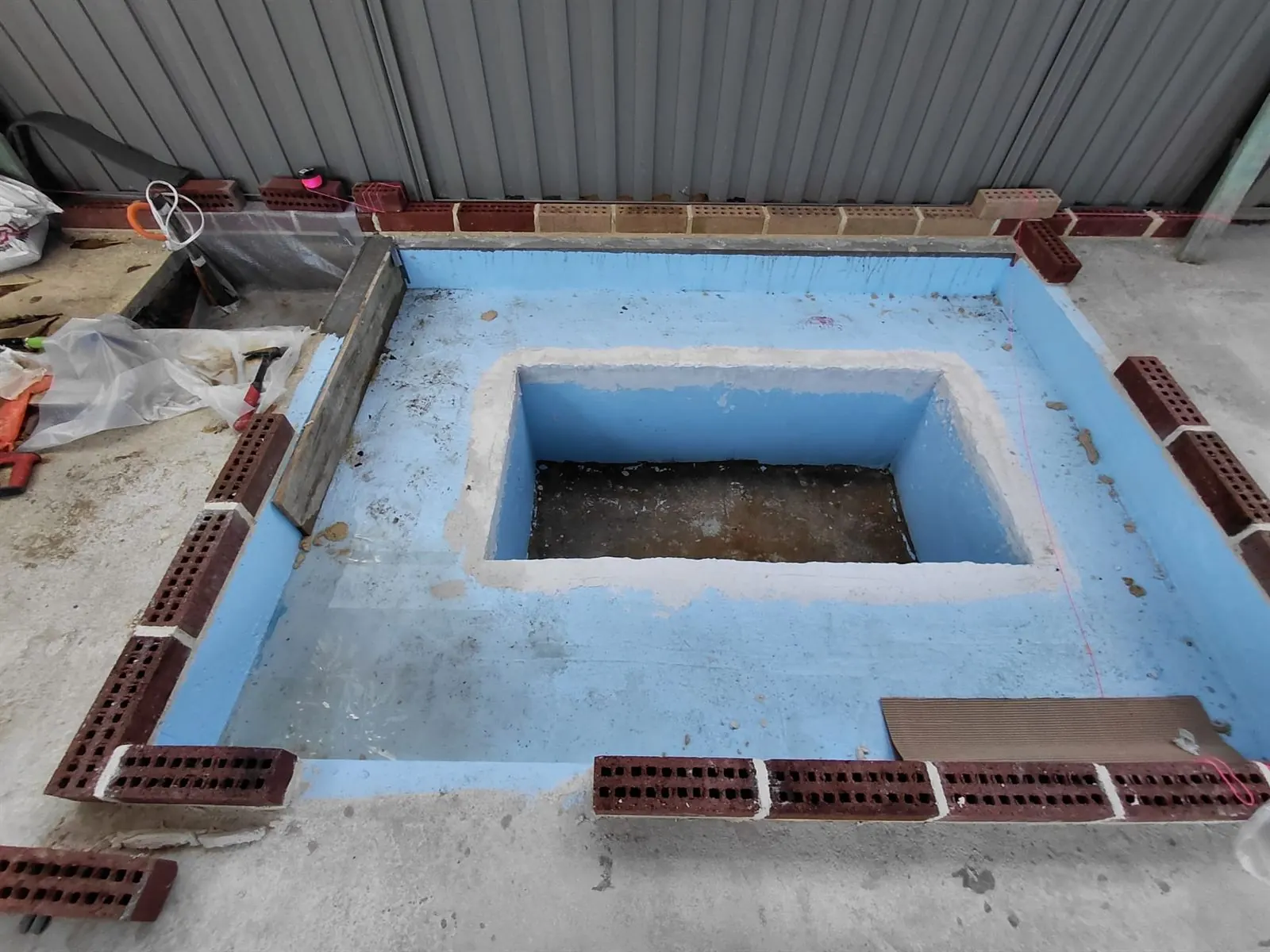
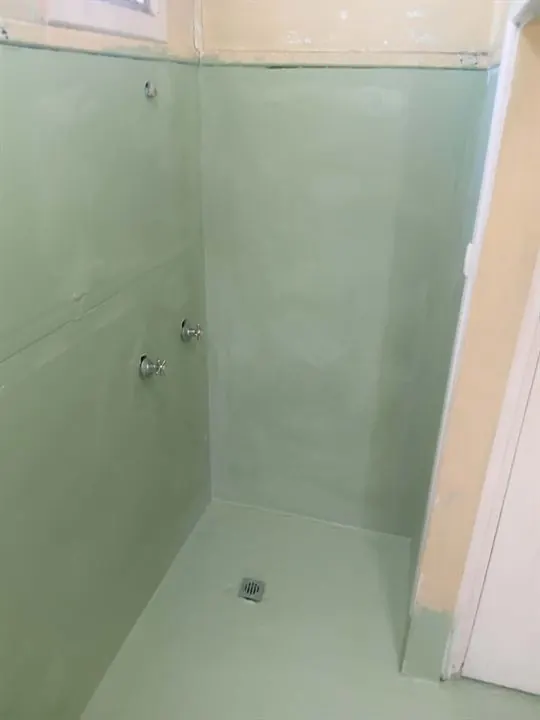
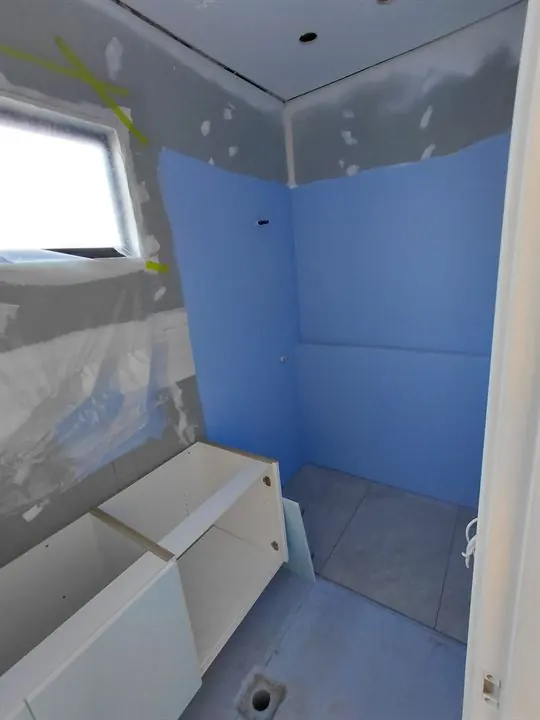
- Photographed before it's covered
Wet areas and dry areas
What the rules ask for
A wet area is any room where water ends up on the floor or walls: bathrooms, ensuites, showers, laundries and toilets. In those rooms the National Construction Code (NCC 2022, Part 10.2) and AS 3740-2021 set out what has to be waterproof and how the floor falls.
- The whole shower floor, and the shower walls to at least 1800 mm, must be waterproof
- Every wall-to-floor junction in the bathroom must be waterproof, inside the shower and out
- Laundry and toilet floors must be at least water resistant, with the junctions sealed
- A shower floor falls to the waste at between 1:80 and 1:50
- Where a shower is stepped down, the step is at least 25 mm
Source: NCC 2022 Housing Provisions, Part 10.2. More on wet and dry areas.
Where leaks start
Most leaks don't come through the middle of a floor. They come from the places where things meet or pass through:
- Wall-to-floor and wall-to-wall junctions
- Floor wastes
- Tap and pipe penetrations
- The shower edge and the doorway
That's where most of our time goes.
How we waterproof
Six steps, in order, every time
On a typical bathroom. The products are the ones we reach for most; your quote says exactly what's going in.
Screed to falls
The floor shaped so water runs to the waste, checked with a level before any membrane goes on. Screeds and falls
Prime
The substrate primed so the membrane bonds, for example with ARDEX WPM 265.
Bond breakers
At every wall-to-wall and wall-to-floor junction, so the membrane stretches when the house moves instead of tearing.
Puddle flanges and penetrations
Flanges at the floor wastes, and every tap and pipe penetration sealed.
Water stops
At the shower edge and across the doorway, so water can't track under the tiles into the next room.
Two coats, fully cured
Two coats of a Class III membrane, such as ARDEX WPM 002 or WPM 155 Rapid Plus, to the manufacturer's thickness. We don't tile over wet membrane to catch up on a schedule.
On site
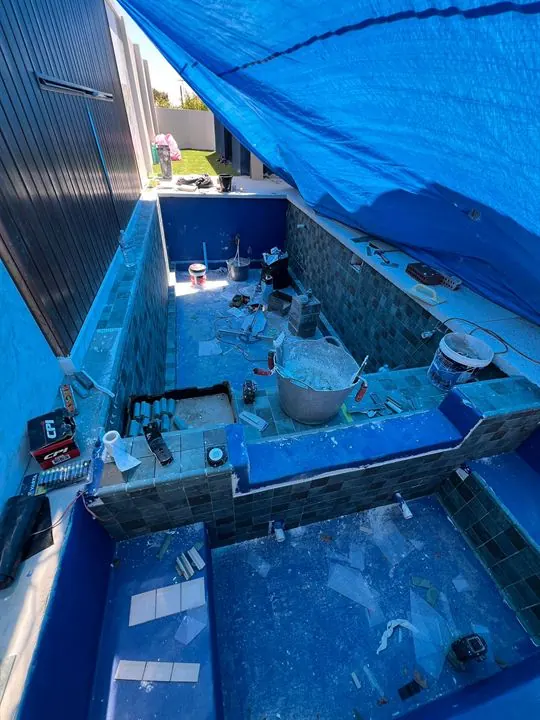
What it looks like before it's covered
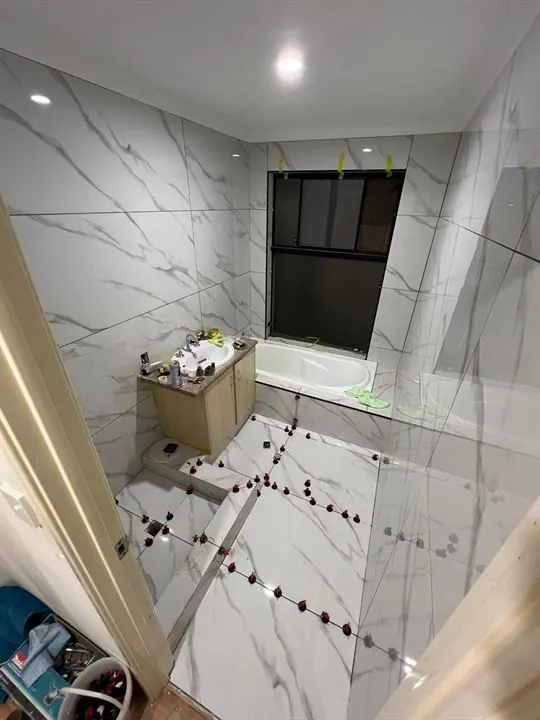
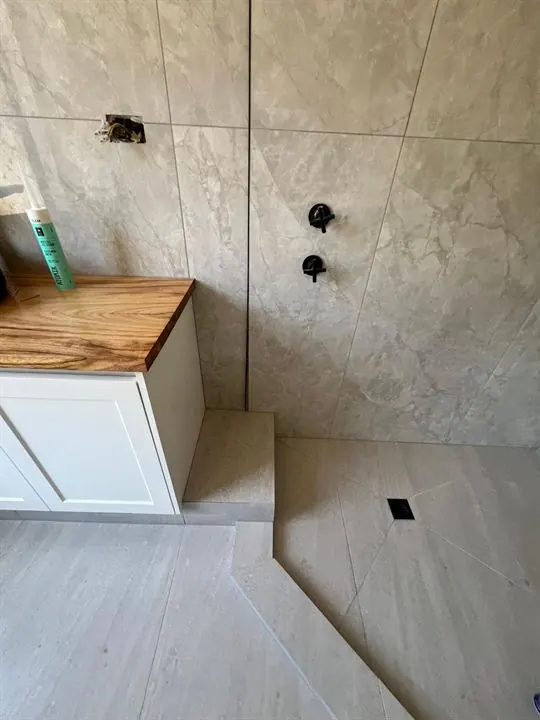
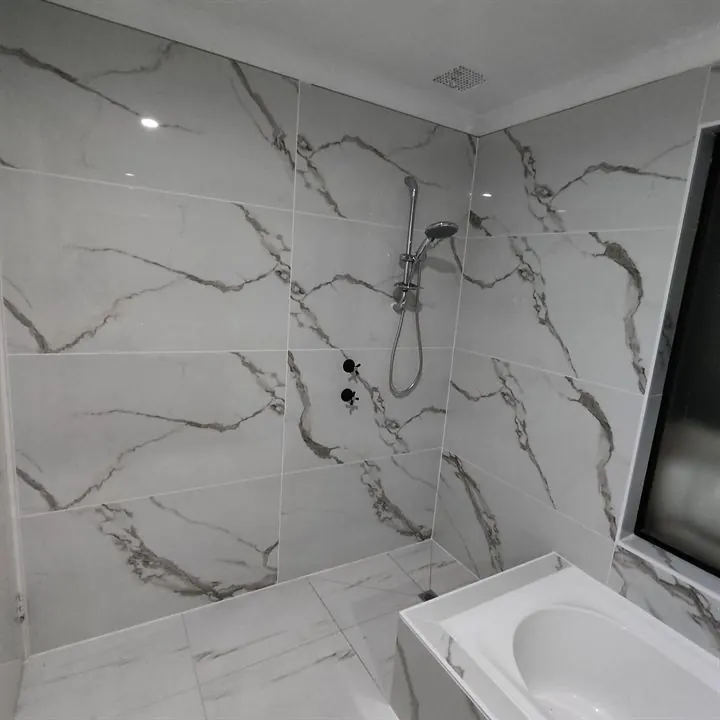
We photograph the membrane before the tiles go on. Once it's tiled, nobody sees it again.
Related project
Two-coat waterproofing in Greenwood
For a property manager in 2024: 600 × 600 tiles to the walls and floor, over two coats of waterproofing membrane, with a water stop at the shower.
Waterproofing is the one part of a bathroom you can't inspect once it's finished, and the most expensive to fix. It's on every quote as its own line, so you can see it's there.
Questions
Waterproofing questions
My shower is leaking. Can you just regrout it?
Sometimes grout and silicone are the problem, and resealing fixes it. More often the water is getting past a failed membrane or a waste with no puddle flange, and regrouting only hides it for a while. We'll look first and tell you which it is before you spend anything.
Do you waterproof laundries and toilets too?
Yes. Under NCC 2022 their floors need to be at least water resistant, with the wall-to-floor junctions sealed. We treat them the same way we treat a bathroom: primed, bond breakers at the junctions, and membrane where it's needed.
How long does the membrane take to cure?
It depends on the product, the temperature and the humidity. The drying time on the tin is a minimum, and we wait for it. A faster-drying membrane such as ARDEX WPM 155 Rapid Plus is an option where time matters.
Can you waterproof for my builder or plumber?
Yes. We screed, waterproof and tile wet areas for builders, and leave the room ready for their fit-off. Builders and property managers.
Need a wet area done properly?
Tell us about the room, or send a photo of the leak. We'll look for free and quote the waterproofing as its own line.